The Quality User Paradox: Why Distribution Just Became Easy, And Harder Than Ever
Everyone can reach users now. The question is: can you reach the right ones?

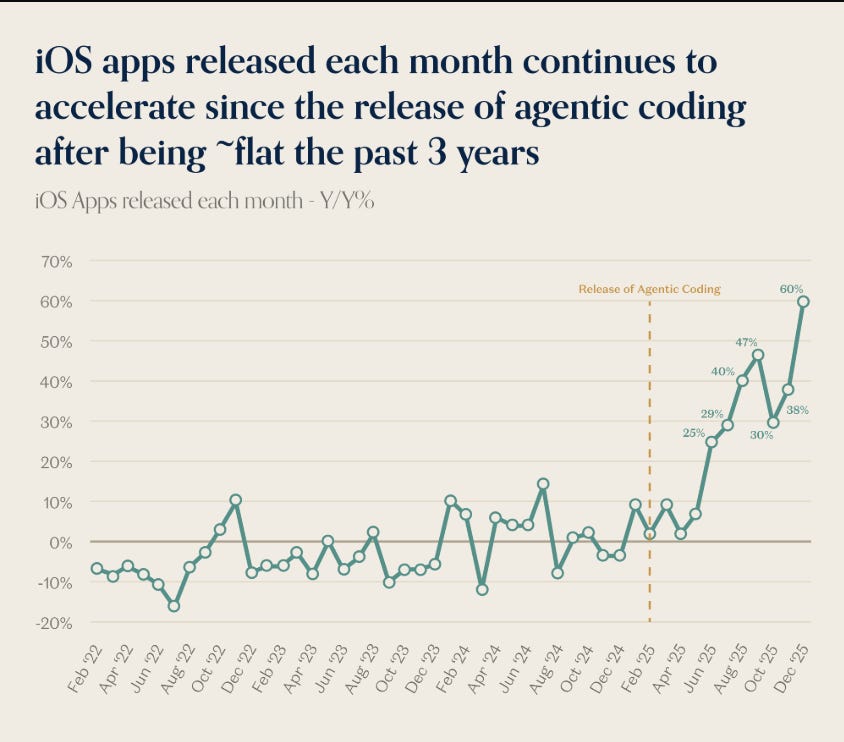
My last piece argued that development is dead as a moat. When anyone can ship an app in hours, building becomes a commodity. Distribution wins.
But here’s what I didn’t say: distribution itself is about to get commoditized too.
The real moat isn’t reaching users. It’s reaching quality users—people who actually use your product, stick around, and tell others. And there’s no better infrastructure for finding them than Web3.
The Distribution Democratization
We’re witnessing something unprecedented. The same AI tools that collapsed development time are now collapsing distribution barriers.
Viral mechanics can be engineered. Growth loops can be templated. Paid acquisition has never been more accessible. The playbooks are public. The tools are cheap.
Which means reaching a million eyeballs isn’t the flex it used to be.
The new question isn’t can you get users—it’s can you get users who matter. Users who convert. Users who retain. Users who become evangelists rather than extractors.
This is where most projects die. They solve the reach problem and celebrate, then watch their metrics collapse as mercenary users extract value and disappear.
The Airdrop Hunter Problem
Web3 learned this lesson painfully.
The early quest platforms—Galxe, Zealy, Layer3—were revolutionary. They let projects tap into millions of crypto-native users hungry for rewards. Quests replaced cold outreach. Token incentives replaced paid ads.
But the model had a flaw: it optimized for volume, not quality.
Airdrop hunters became an industry. Bots proliferated. Projects celebrated massive participation numbers, then watched their communities evaporate the moment rewards dried up. The users weren’t users—they were extractors.
The platforms adapted. Galxe built anti-Sybil tooling and passport systems. Zealy added reputation layers. Everyone started talking about “quality” instead of “quantity.”
But the fundamental architecture remained the same: incentivize actions, hope quality follows.
The Inversion
Here’s what I’ve been thinking about: what if we flipped the model entirely?
Instead of using incentives to attract users and hoping some stick, what if you built a community of quality users first—then offered them as distribution to projects that deserve their attention?
This is the thesis behind what we’re building at Lingo.
The traditional model: Project → Incentives → Mass users → Hope for quality The inverted model: Quality community → Curated projects → Genuine adoption
It’s the difference between a casting call and a talent agency. One floods you with applicants. The other sends you people who are actually right for the role.
Why Web3 Is Uniquely Suited for This
There’s a reason this inversion works better in Web3 than anywhere else.
Traditional loyalty programs are one-directional. You earn points, you redeem rewards, the company extracts data. The user is the product.
Web3 flips this. Token mechanics align incentives between platform and participant. When users hold stake, they’re not just earning rewards—they’re invested in the ecosystem’s success. Their incentive is to bring in other quality users, not to extract and leave.
This is what makes staking-based community models fundamentally different from quest-based acquisition models.
At Lingo, stakers earn real-world rewards—vacations, experiences from 3,000+ brands including Spotify, Netflix, Nike. But here’s the key: the rewards pool grows with the ecosystem. Your incentive isn’t to farm and dump. It’s to build something that compounds.
This creates a natural filter. Mercenary users don’t want to lock capital. They want quick extractions. Quality users—people who actually believe in building something—are willing to commit.
The Distribution Network Effect
Here’s where it gets interesting.
Once you have a community of verified, committed, quality users, you have something extremely valuable: a distribution network that projects will pay to access.
Think about what Galxe built: 32 million users, 1.2 billion quests completed. That’s an enormous distribution asset. But the signal-to-noise ratio is questionable. Projects using it still have to filter heavily.
Now imagine a smaller network—but one where every user is verified through stake, demonstrated through engagement quality, and aligned through token ownership. That network might be 10x smaller but 100x more valuable per user.
This is the opportunity.
Projects building apps don’t just need reach. They need qualified reach. They need users who will actually try the product, provide real feedback, and convert to long-term customers.
A community built on quality—filtered through commitment mechanisms like staking—becomes the ultimate distribution channel.
The Lingo Model
This is exactly what we’re building toward.
Phase one: Build the quality community. Real rewards, real stake, real alignment. Filter out the mercenaries through commitment mechanisms. Build something people actually want to be part of.
Phase two: Become the distribution layer. Connect quality users with quality projects. Create a curated pipeline where projects know the users they’re reaching are genuine, and users know the projects they’re discovering are worth their time.
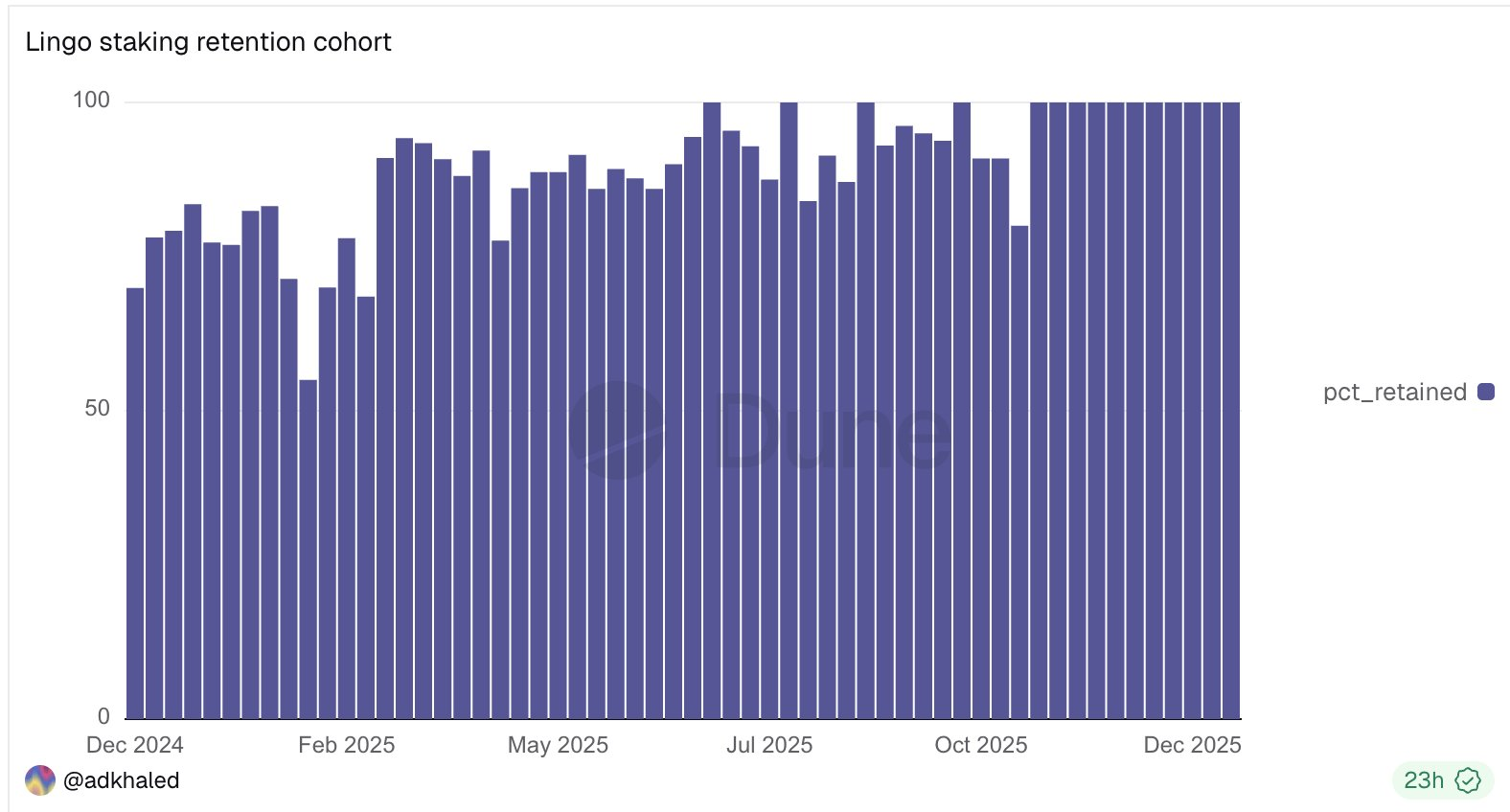
The staking mechanics matter here. When your community has $400k+ locked and committed, you’re not dealing with bots or airdrop hunters. You’re dealing with people who have skin in the game.
And skin in the game changes everything.
The New Stack
If the last era was about building distribution, the next era is about building quality distribution.
The stack looks something like this:
Layer 1: Commitment mechanisms Staking, locking, reputation systems. Anything that filters for genuine interest over mercenary extraction.
Layer 2: Alignment mechanics Token ownership, revenue sharing, community governance. Structures that make user success and platform success the same thing.
Layer 3: Curation infrastructure Systems for matching quality users with quality projects. Not everyone should see everything—the right users should see the right opportunities.
Layer 4: Distribution activation The actual mechanics of connecting users to projects: quests, referrals, onboarding flows, whatever works.
Most platforms start at Layer 4 and work backward. They get distribution, then try to add quality filters retroactively.
The opportunity is to start at Layer 1. Build quality first. Let distribution emerge from alignment.
Why This Matters for Builders
If you’re building apps in this new era—where development is instant and distribution is democratized—here’s what you need to understand:
The quantity game is over. Everyone can reach millions. Most of those millions are worthless.
The quality game is just beginning. The projects that win will be the ones who access real users—people who actually want what they’re building.
This means the platforms that aggregate quality users become enormously valuable. More valuable, perhaps, than the platforms that aggregate attention.
Galxe and Zealy proved the model: incentivize participation, capture distribution value. The next generation will prove the evolution: curate quality, capture even more value.
The Counterargument
I should address the obvious objection: isn’t this just gatekeeping? Isn’t open access the whole point of Web3?
Fair challenge. But there’s a difference between open access and undifferentiated access.
Anyone can still participate. The mechanisms are permissionless. But quality users get differentiated access—better opportunities, curated projects, compounding benefits.
This isn’t gatekeeping. It’s incentive design. You want quality users to have better outcomes than mercenary users. Otherwise, why would anyone choose quality?
The goal isn’t exclusion. It’s alignment.
Where This Goes
The end state is a world where quality communities become the primary distribution channel for new products.
Projects won’t launch with paid ads or mass airdrops. They’ll launch through curated community partnerships—accessing users who are pre-qualified, genuinely interested, and incentivized to help.
The platforms that build these quality communities—through staking, through real rewards, through genuine alignment—will own the distribution layer for the next generation of applications.
This is what we’re building at Lingo. A community so valuable that projects compete for access to it. A distribution network where quality is the feature, not an afterthought.
Development is commoditized. Distribution is democratizing. Quality is the last moat.
And Web3 is the only infrastructure capable of building it.
The question isn’t whether you can reach users. It’s whether you can reach users worth reaching—and whether they’ll still be there tomorrow.